Computing power. Energy intelligence.
Find the flexibility in loads and storage while respecting service continuity requirements.
Energy flexibility software
Your energy can do more. FlexKit turns the flexibility of your assets into market revenue, starting from your operating limits.
Our mission
FlexKit turns the idle flexibility of large electricity users into safe, recurring market revenue. One software layer, no hardware to add.
The platform
Four software modules learn each asset’s safe flexibility from its own data and bid it on DSO and TSO markets at the same time.
See the modulesYour assets
 FlexKitForecast · Safe envelope · Bidding · Ageing
Markets
Interactive demo
Four modules, one process. From forecasting to optimised participation in the markets.
FlexKitInteractive demoASSET INTELLIGENCE
Illustrative data, not tied to a real asset or to a revenue estimate.
Revenue stacking
FlexKit coordinates bids across several markets instead of relying on a single one, always inside the safe operating region of each asset.
Shift consumption and storage towards the hours that are worth more.
Offer balancing capacity to the transmission system operator.
Help the local grid manage congestion through local flexibility markets.
Storage works only when the payment beats battery degradation.
The market
Large loads, distributed generation and batteries can support the grid. Today most of their flexibility is still unused: money left on the table, on assets already paid for.
≈€534M
Yearly value of flexibility in FlexKit’s four segments in Europe, today.
≈€1,045M
Expected value of the same flexibility in 2030.
12/12
European countries monitored by smartEn where TSO markets are open to demand-side flexibility.
≈164 GW
Demand-side flexibility potential in the European Union by 2030.
Average scenario. Estimates and market data from the FlexKit business plan, based on industry sources.
Solutions
Different assets, different constraints. One platform to recognise what each of them can do.
Computing power. Energy intelligence.
Find the flexibility in loads and storage while respecting service continuity requirements.
Continuous production. New possibilities.
Match the modulation margins of your sites with the planning of your production activities.
The right energy. At the right time.
Coordinate generation and storage, weighing market opportunities, technical constraints and battery degradation.
Many assets. One overview.
Know the flexibility of your portfolio and coordinate participation across DSO and TSO markets.
The team
FlexKit was born inside the Electric Power Systems group of Politecnico di Milano. Founders and advisors have worked and published together on every building block of the product: electricity markets, regulation, grid operation, storage, optimisation and software.

Co-founder & CEO · Strategy and fundraising
PhD researcher in Electrical Engineering at Politecnico di Milano. Models how batteries earn across energy, ancillary and capacity markets, and how they age, backed by lab tests on cells and modules.

Co-founder & CTO · Technology and product
Postdoctoral researcher at the Department of Energy, Politecnico di Milano, with a PhD cum laude in Electrical Engineering. Works on power-system optimisation, network operation and the management of distributed resources and storage: the optimisation core of FlexKit.
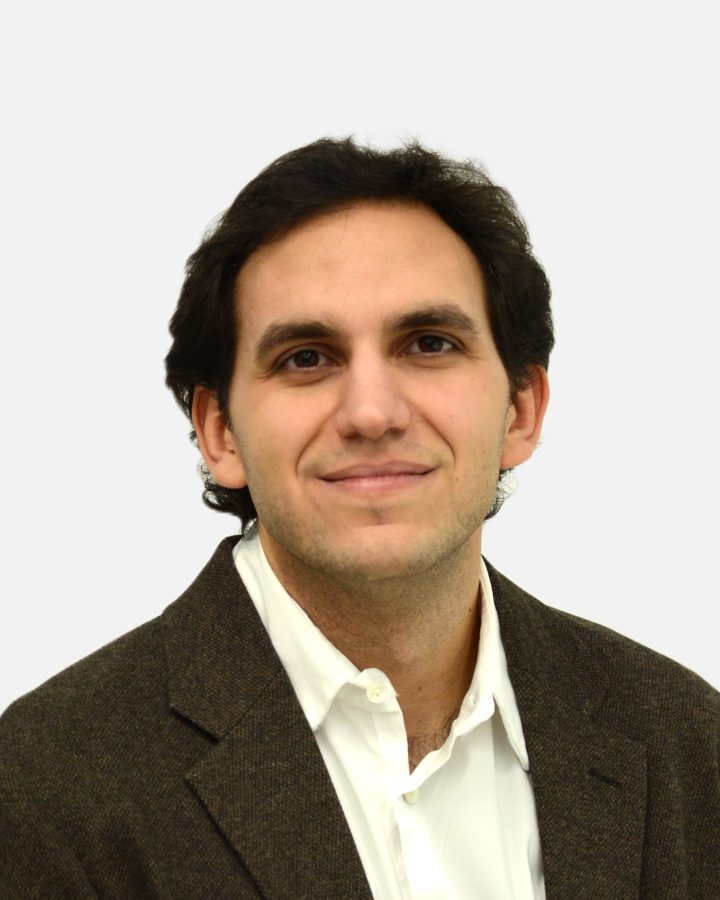
Co-founder & COO · Operations, sales and marketing
Postdoctoral research fellow at the Department of Energy, Politecnico di Milano, working on local flexibility pilot projects for urban distribution networks. Visiting PhD at the University of Waterloo on TSO–DSO coordination.
Technical advisorsProf. Davide Falabretti (Department of Energy page, opens in a new tab)Prof. Valentin Ilea (Department of Energy page, opens in a new tab)Dr. Giuliano Rancilio (Department of Energy page, opens in a new tab)
Why FlexKit
The safe operating region is computed before any bid. Your primary service is never put at risk.
Revenue stacking across DSO local markets and TSO services, instead of a single market.
Battery wear is priced in: storage works only when the payment beats degradation.
New assets are onboarded from their own data, with no bespoke re-engineering and no hardware to add.
FAQ
FlexKit is designed as a software layer that uses asset data. Integration is defined around the systems already in place and the data available, with no proprietary FlexKit hardware to add.
We focus on data centres, large consumption sites, distributed generation with storage and aggregator portfolios. The actual margin depends on the constraints and characteristics of each case.
Service requirements and technical limits are inputs to the feasible operating region. They are defined together with the operator and bound the options considered by the optimisation.
The first step is a conversation about your assets, the data available and your operating constraints. From there we can define an analysis and assessment path for your use case.
The next opportunity is already there